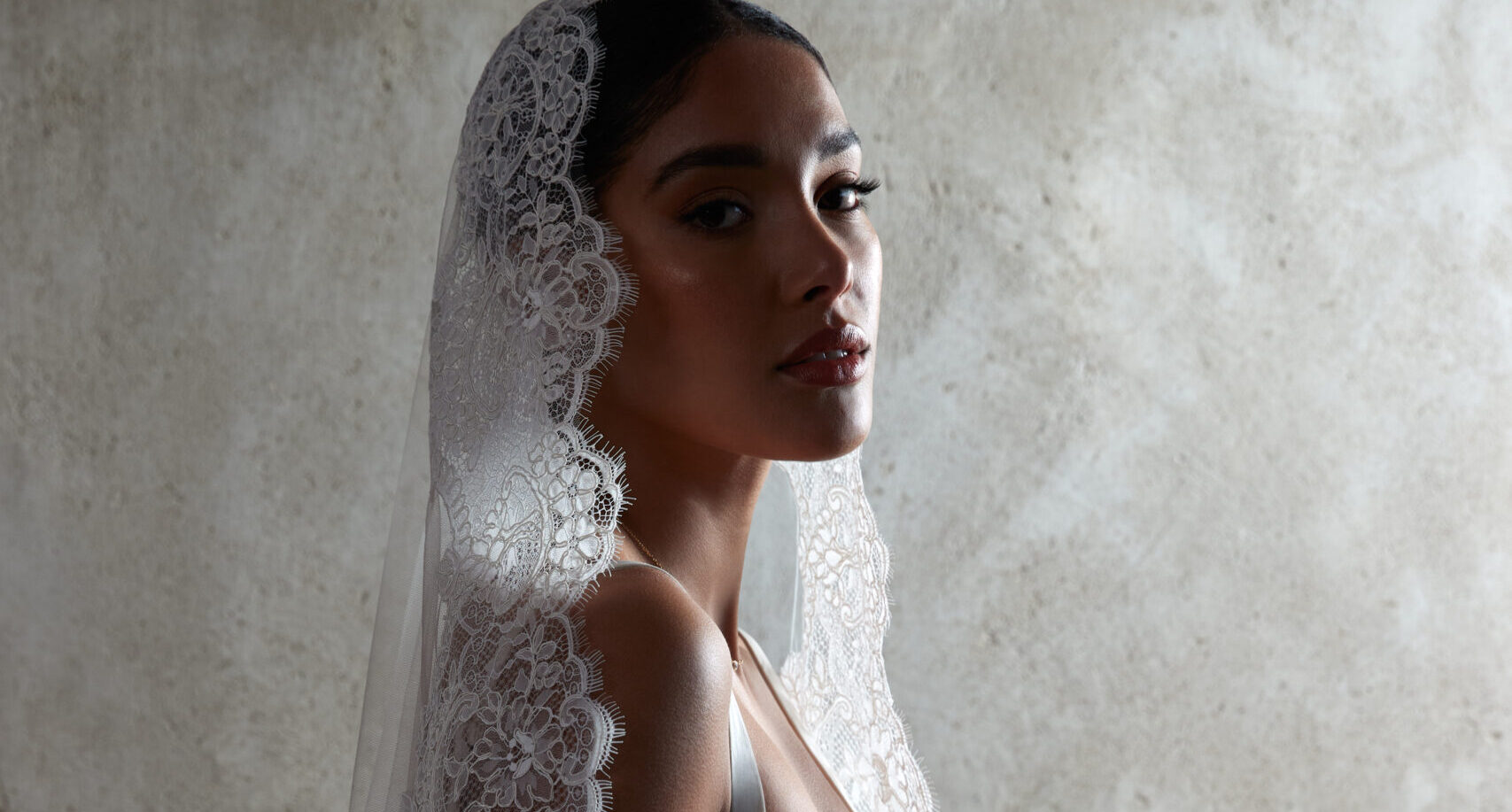
“The 2026 bride is thinking more carefully about the whole look rather than treating the veil as an afterthought,” says Sarah Britten, founder of Britten, a Bath-based veil atelier. “Wedding veils are increasingly the statement piece, which is something I’ve always believed they should be.”
The shift is visible this year: where brides once treated a veil as a bridal bolt-on, wedding veil styles in 2026 are increasingly an opportunity to align with a particular aesthetic code, be it arch minimalism or a megawatt turn towards the dramatic And designers are responding in spades, with designs that range from light-touch Italian tulle to extra-long cathedral drama.
The golden rule, regardless of style, remains consistent across designers. “Choose your dress first, always – the veil is there to complete the dress, not compete with it,” says Britten. “If in doubt, go one shade lighter than your dress rather than trying to match exactly – it creates a soft, ethereal effect that always works.” The designer Sassi Holford, who runs the Couture Veil from her Somerset atelier, frames it similarly: “The veil should enhance your look, not overwhelm it, but it should absolutely reflect your personality and make you feel amazing. If it makes you feel fabulous, go for it.”
Veils are also at the nexus of a more considered approach to bridal buying – one focused on provenance and sustainability that small-batch design houses like Britten, where each veil is handmade by a single maker, are at the forefront of. The design house is known to prioritise fabric quality over embellishment, indicative of a wider 2026 trend: “Brides are becoming more fabric-literate, asking specifically about provenance and quality in a way they perhaps didn’t a few years ago,” Britten explains.
Four distinct wedding veil styles have emerged in 2026, each with their own design language and styling logic. Here’s how to navigate them.
Modern Minimalism
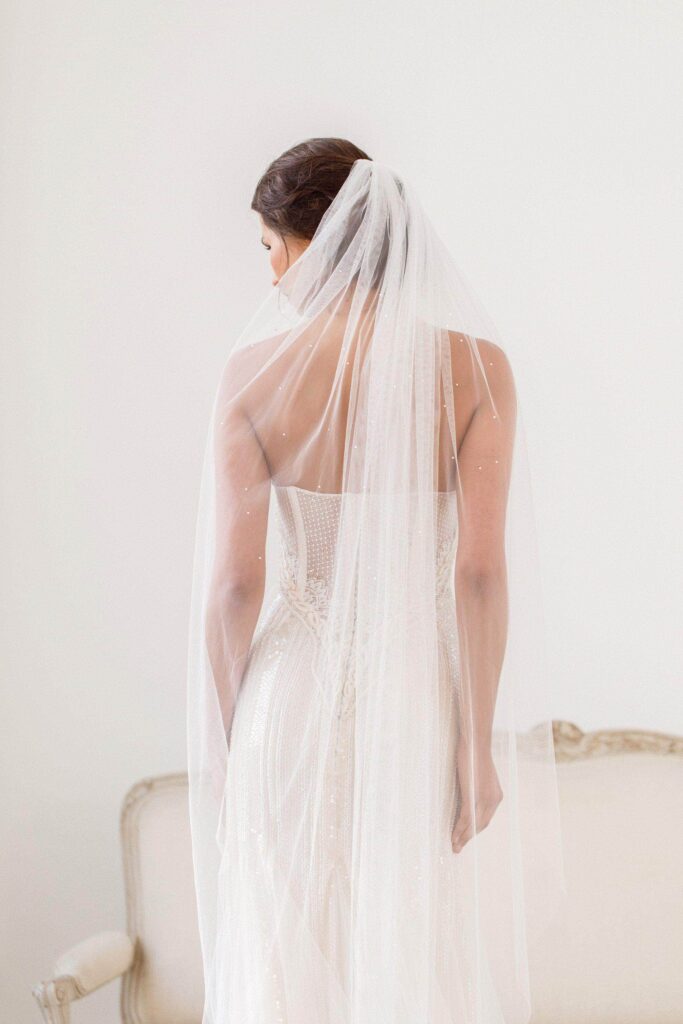
The pared-back veil – no lace, no embellishment, just tulle and a clean edge – requires real confidence in the dress, and in the bride herself. Britten’s Skylar is the purest expression of this. “It’s the original ‘barely there’ veil – the style I created and that Britten now holds as a registered design,” says Sarah Britten. “It’s for the bride who wants to feel the magic of a veil without it overwhelming the dress.”
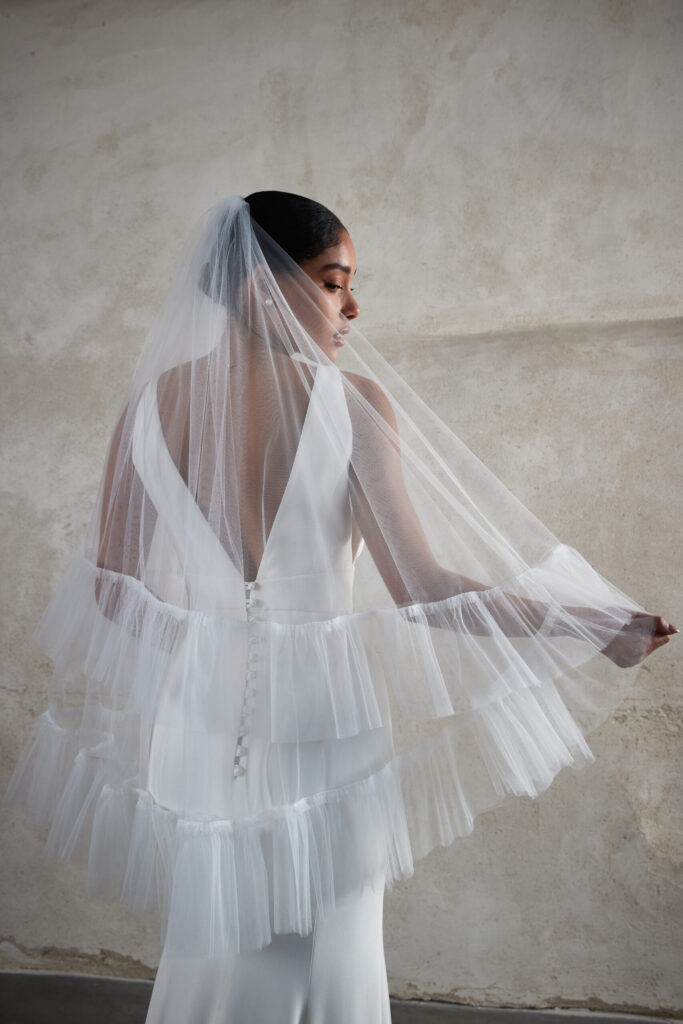
For the minimalists who want a veil for form and not ornament, the key is fabric, namely Italian tulle. The material has the kind of drape and weight that photographs well – and brides are now requesting it by name. Sassi Holford works with English tulle for a similar effect: the brand’s Satin Ribbon veil uses a fine binding that frames the tulle without adding weight, while the Double Ruffle veil creates structure through layered tiers rather than decoration.
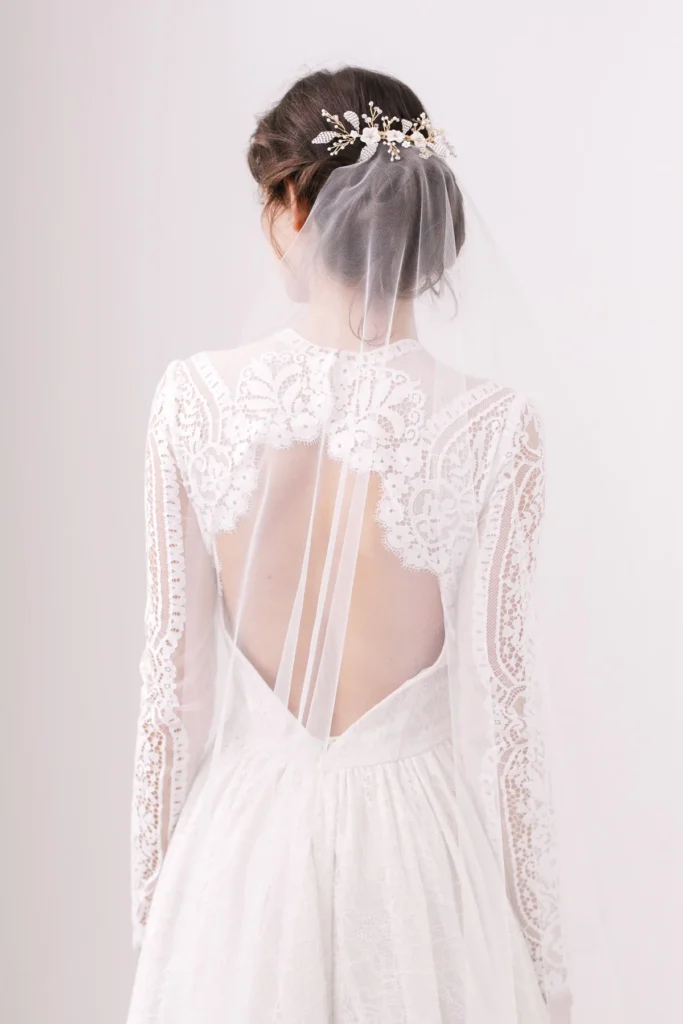
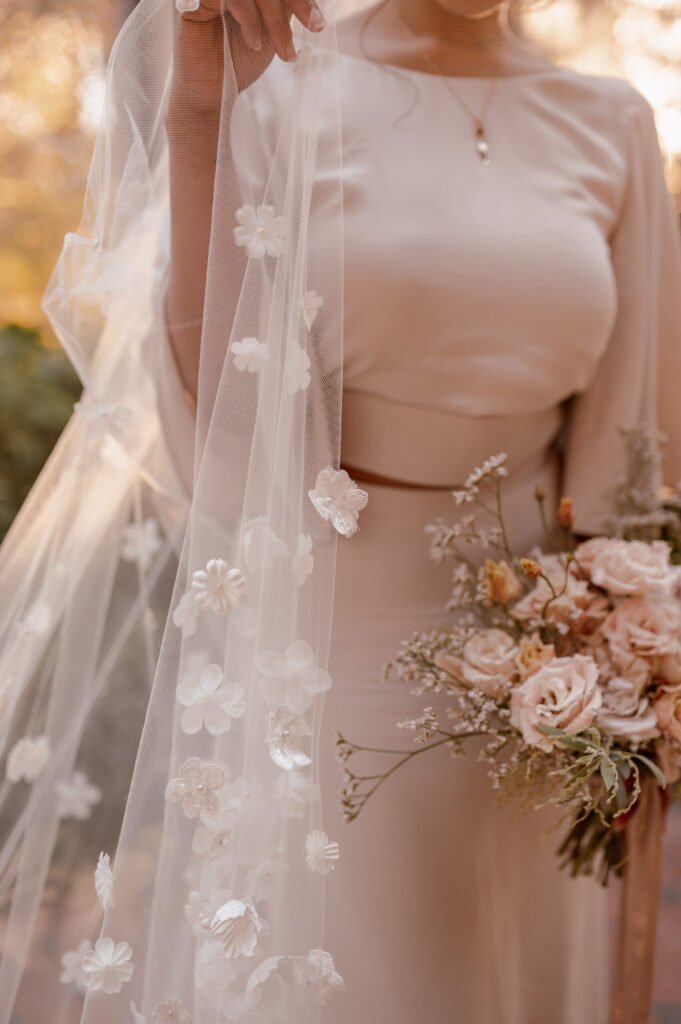
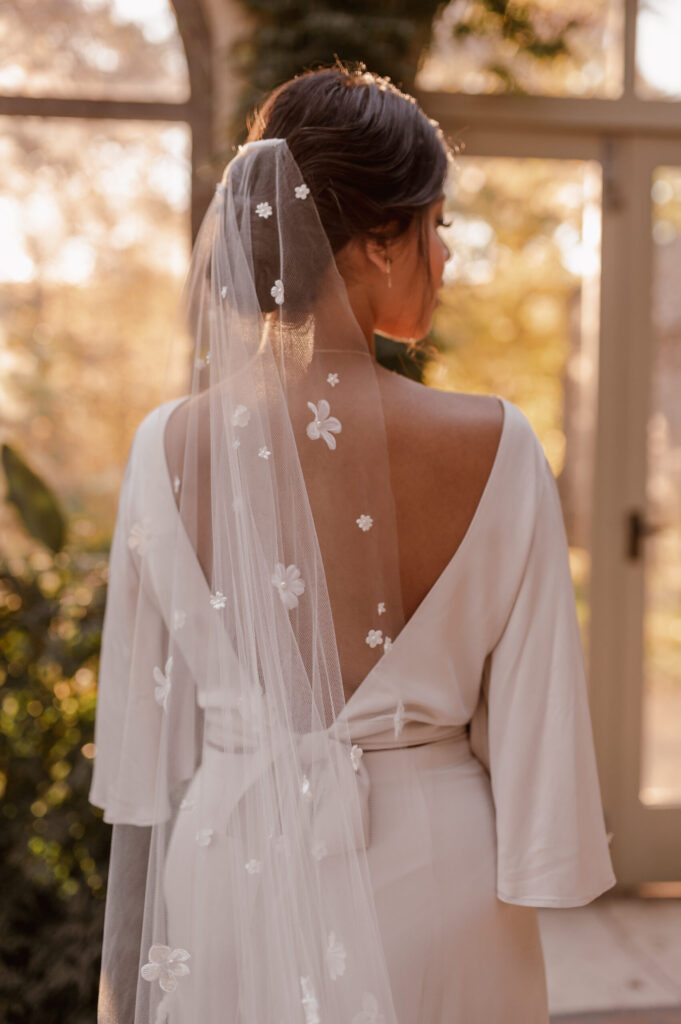
For those who want simplicity but not plainness, bespoke veil designer Sophie Raval’s Julietta strikes a middle ground – hand-drawn, individually embroidered flowers add texture without weight, and the design can be made semi-bespoke with a bride’s chosen blooms. A raw tulle edge creates an easy, barely-there effect.
Classic Lace
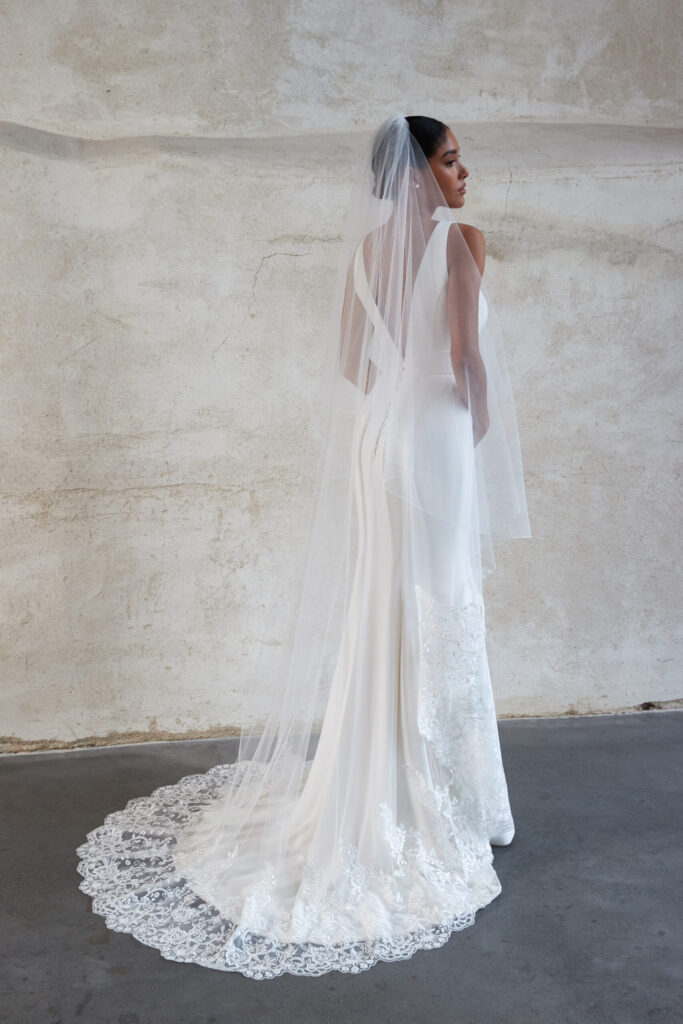
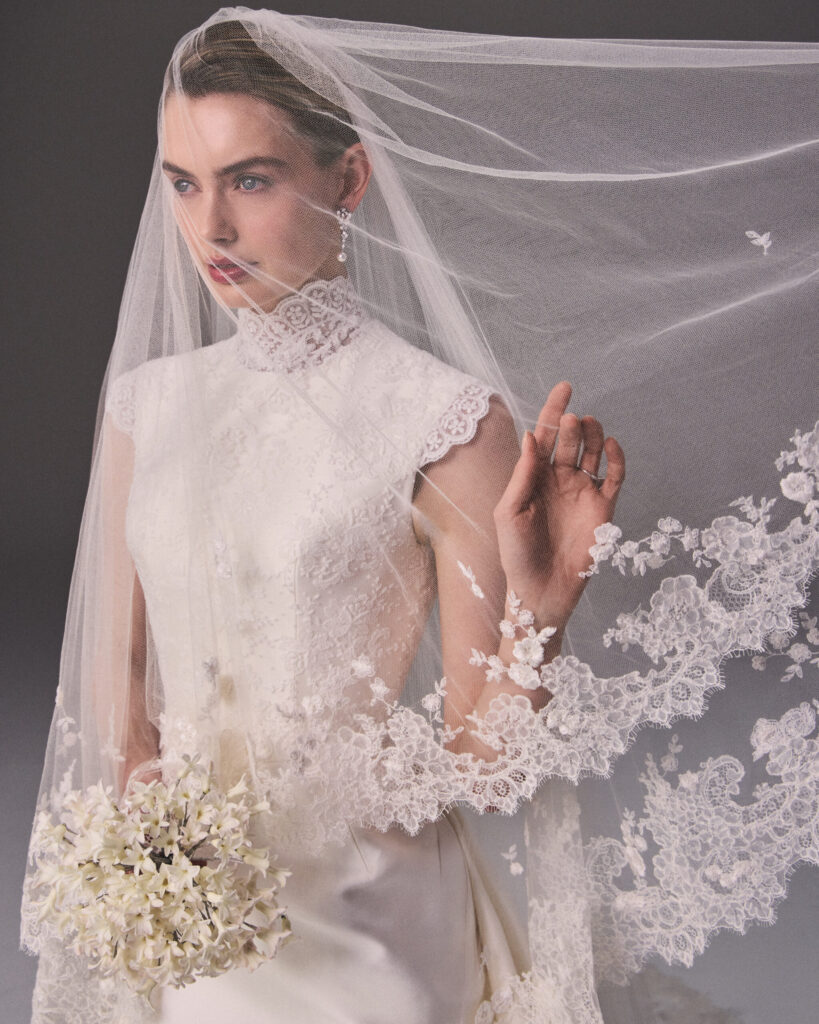
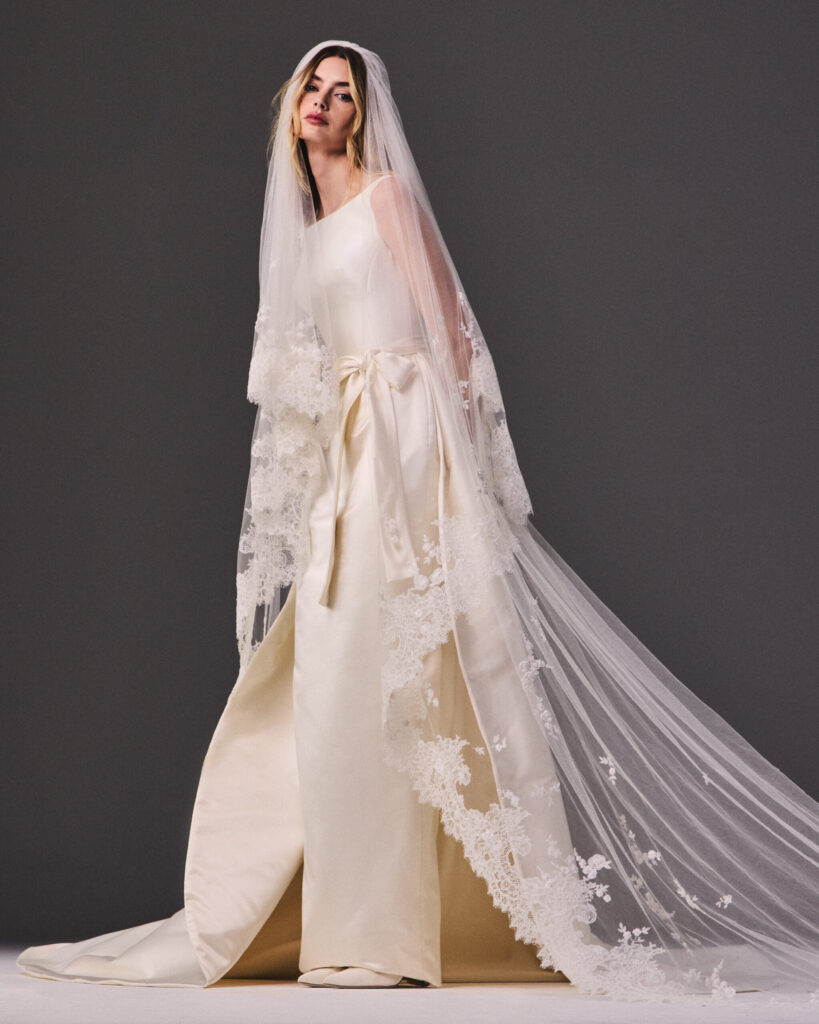
Lace-edged veils remain the most enduringly popular category, particularly when the lace itself carries provenance. Britten’s full lace edge collection uses lace from Cluny Lace, a French manufacturer that supplies Alexander McQueen, Dior, and Burberry. “When a Britten bride wears one of our lace-edged veils, she’s wearing fabric made on machines that have been running since 1845,” says Sarah Britten. “That heritage matters to us enormously.”
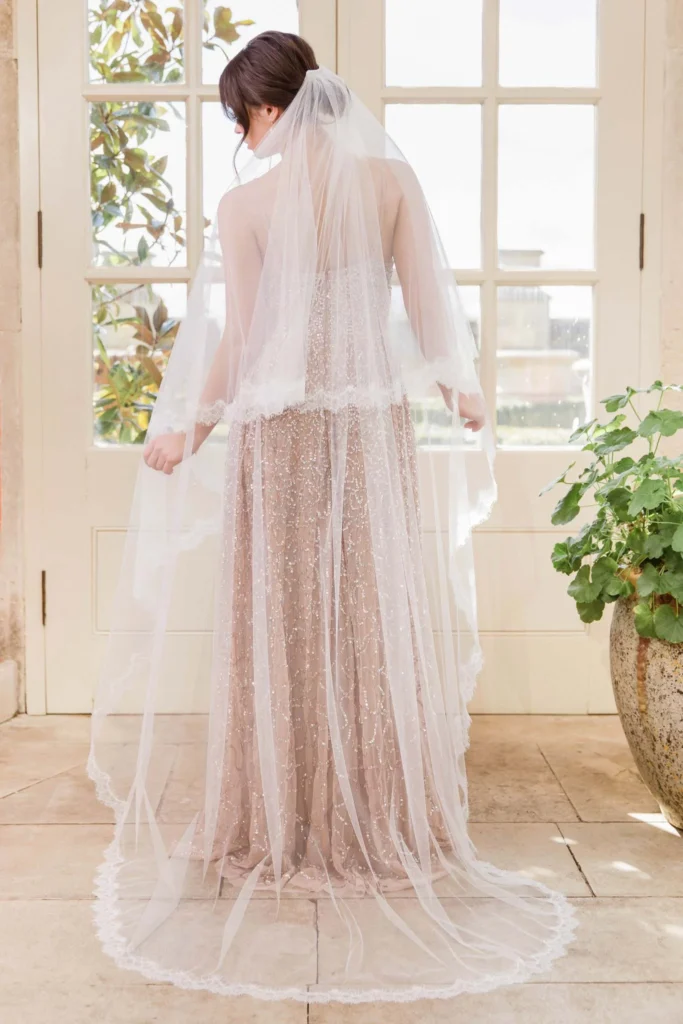
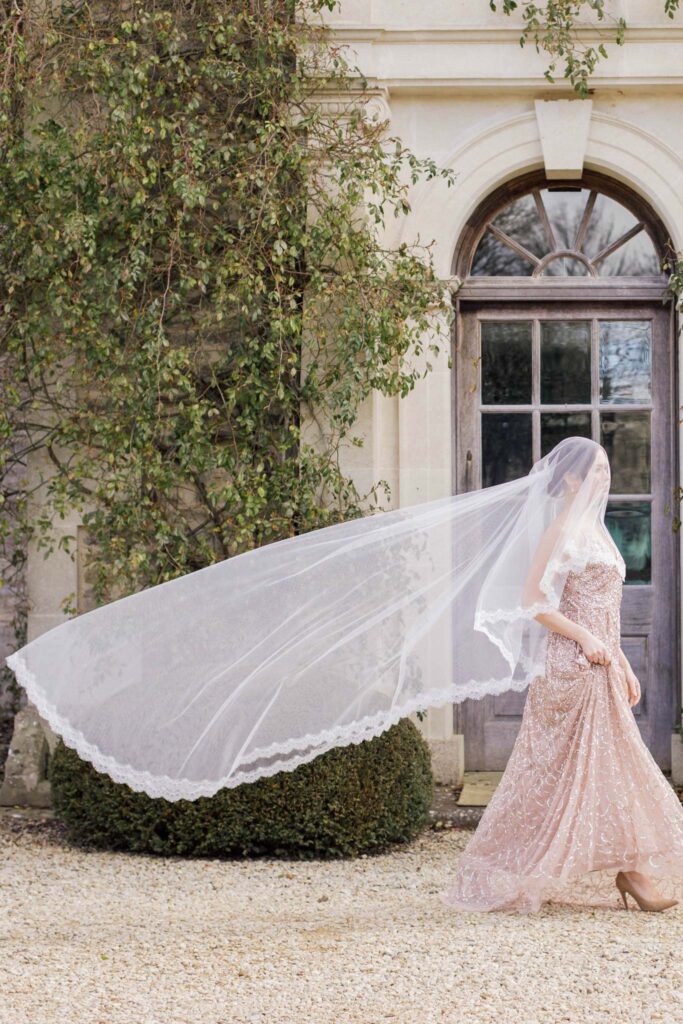
Sassi Holford‘s Mantilla veil takes the lace-edge tradition in a dramatic direction with a nod to Spanish design codes. “For a timeless veil that is still incredibly popular, the long veil with a deep French Chantilly lace edge never fails to impress. Our Mantilla Veil is an elegant yet dramatic interpretation of this – the lace is moulded around the crown of the head, framing the face and creating an effortlessly elegant entrance for the bride,” says the designer.
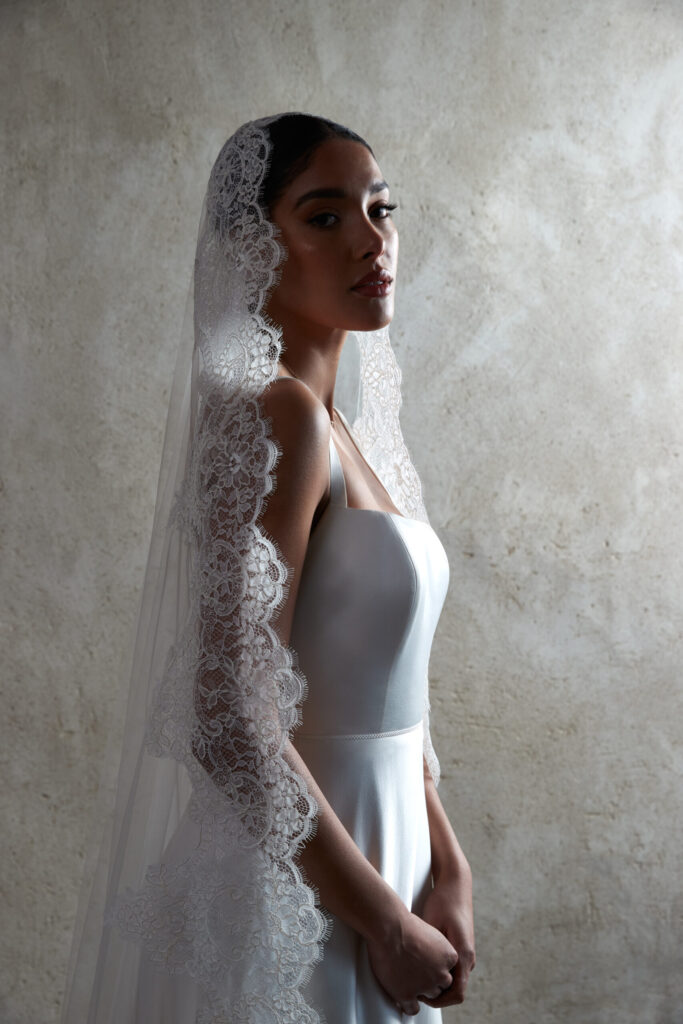
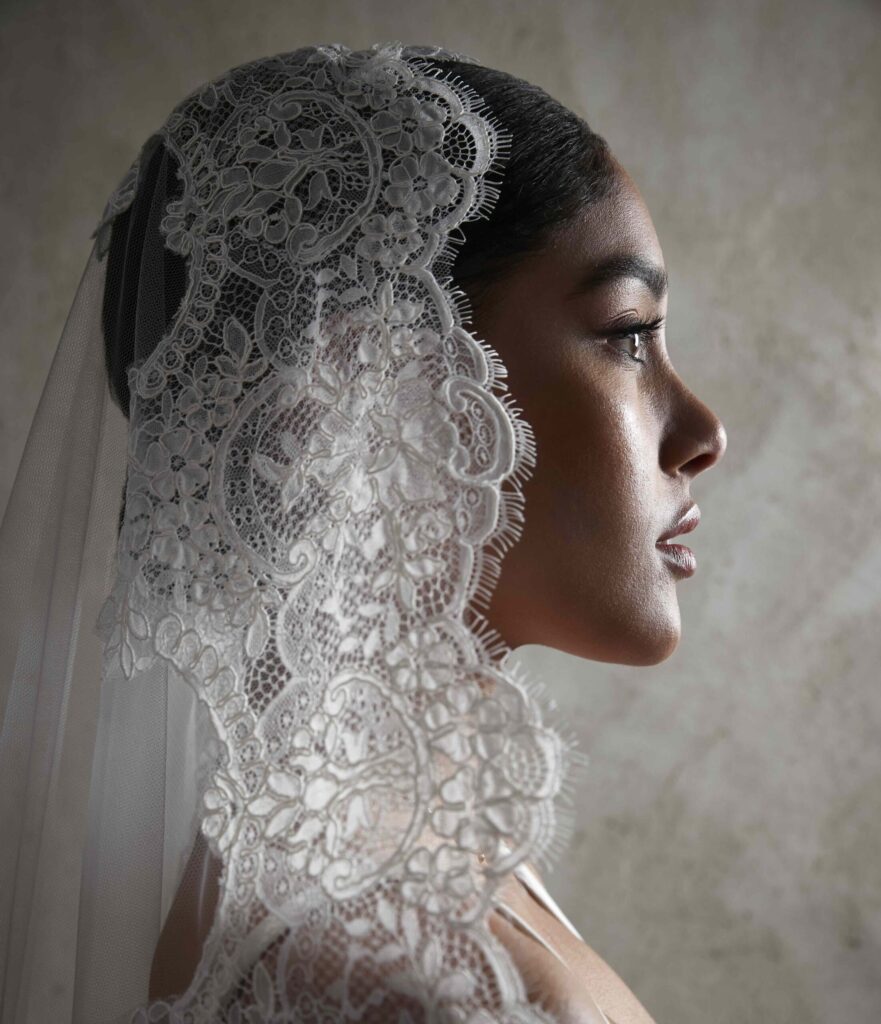
It’s an evergreen choice. “Classic lace-edged veils remain timeless, particularly when the lace is hand-embroidered onto a silk tulle edge for a more delicate, couture feel,” notes Phillipa Lepley. The move this year is away from exact lace matching between dress and veil – brides are choosing lace that complements the mood rather than replicating dress detail.
Cathedral Drama
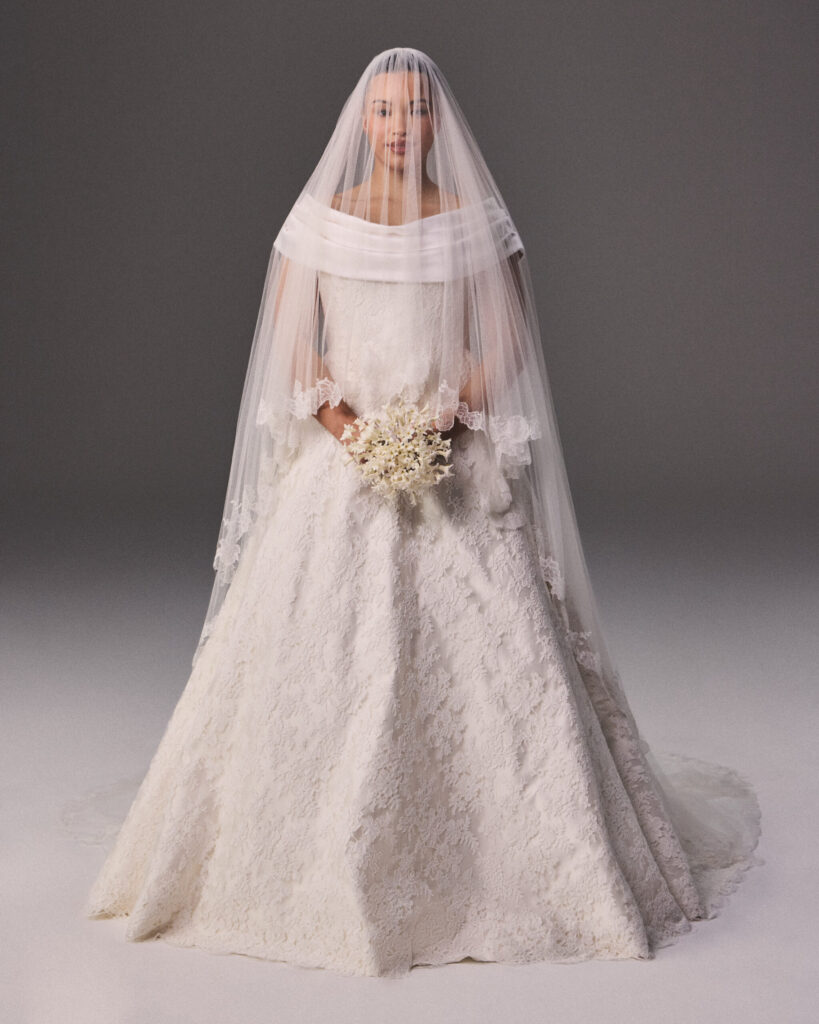
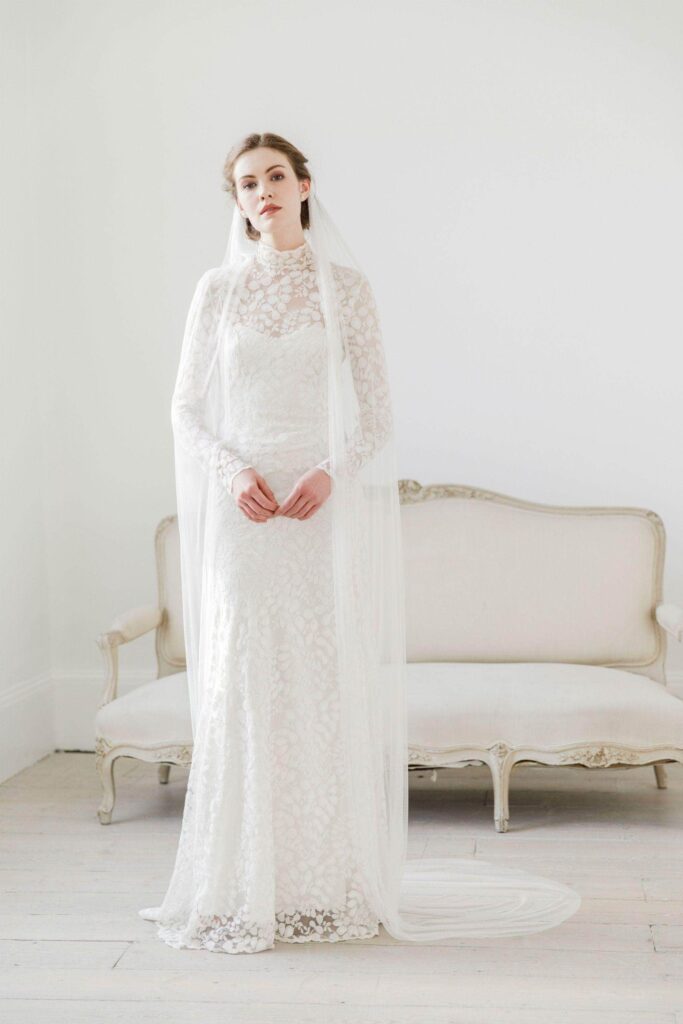
For brides who want an entrance, the cathedral-length veil remains unmatched. Britten’s cathedral length collection is built for exactly this moment. “For sheer dramatic impact, nothing beats a cathedral-length veil,” says Sarah Britten. “The sweep of fabric as you walk down the aisle is something no photograph quite does justice to.” All Britten veils can be made to any length, so if a bride wants the veil to trail a specific distance beyond the dress hem, it’s made to measure.
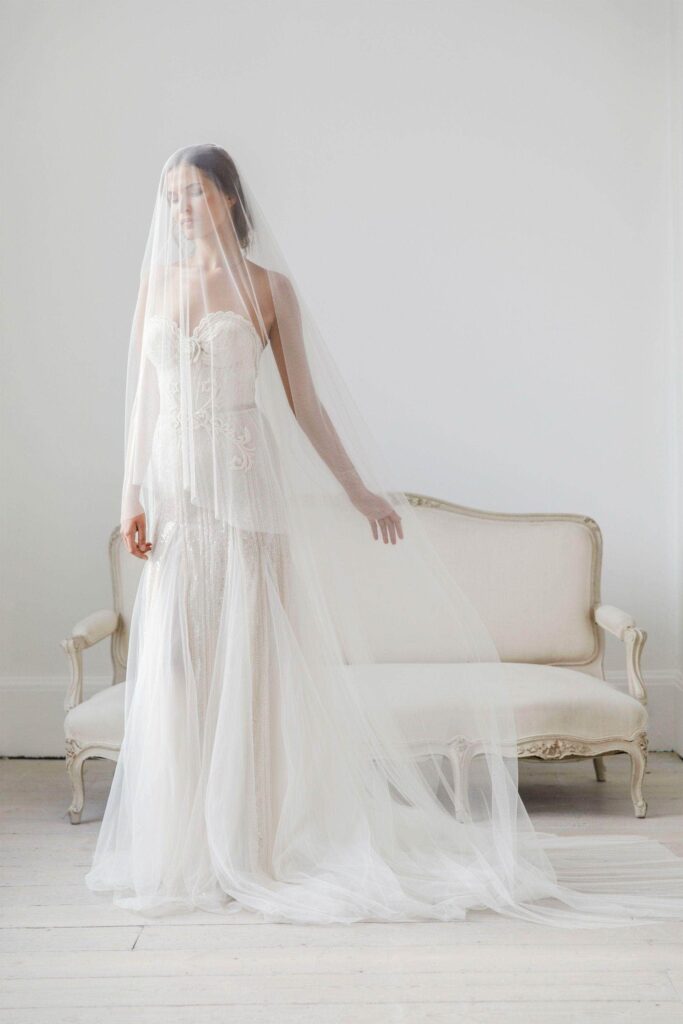
Elsewhere, at Phillipa Lepley, there’s demand for drama in its longest, cleanest form. “We are definitely seeing a rise in extra-long veils that create a striking, romantic silhouette,” she says. “Clean silk tulle veils with fine organza-bound edges are perfect for this look, especially in dramatic cathedral lengths.” Many brides now treat these as ceremony-only pieces, removing the veil after the aisle walk – keeping a dramatic length without worrying about practicality beyond the first hour.
Statement Veils
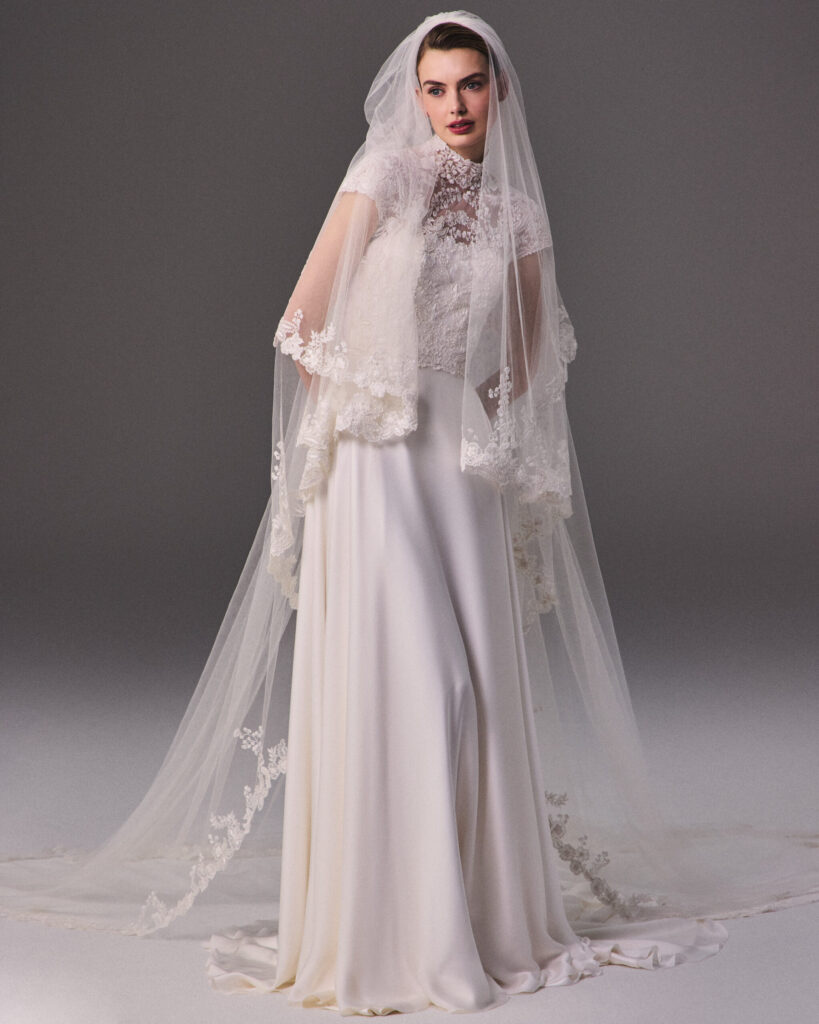
Statement veils work best when the dress provides a clean canvas, but otherwise encompass everything designed to be noticed – whether through embellishment, structure, or sheer fabric presence. Sometimes the statement is the fabric itself. Britten’s Clara is the hero here: pure silk, single tier, and it moves in a way that very few veils do. “It’s a statement through fabric and drape rather than embellishment – effortlessly luxurious,” says Sarah Britten.
Often, the statement comes through personalisation. Sophie Raval’s Sophie veil was designed for the designer’s own wedding – individually cut flowers accented with delicate pearls. “I wanted to strike that balance between an impactful statement piece that didn’t overwhelm me, being a petite bride,” she says. Raval’s choice to personalise is indicative of a wider trend, with brides gravitating toward embroidered flowers inspired by meaningful places or countries, initials and colourful embroidery.
READ NEXT: Wedding Dress Trends For Summer 2026