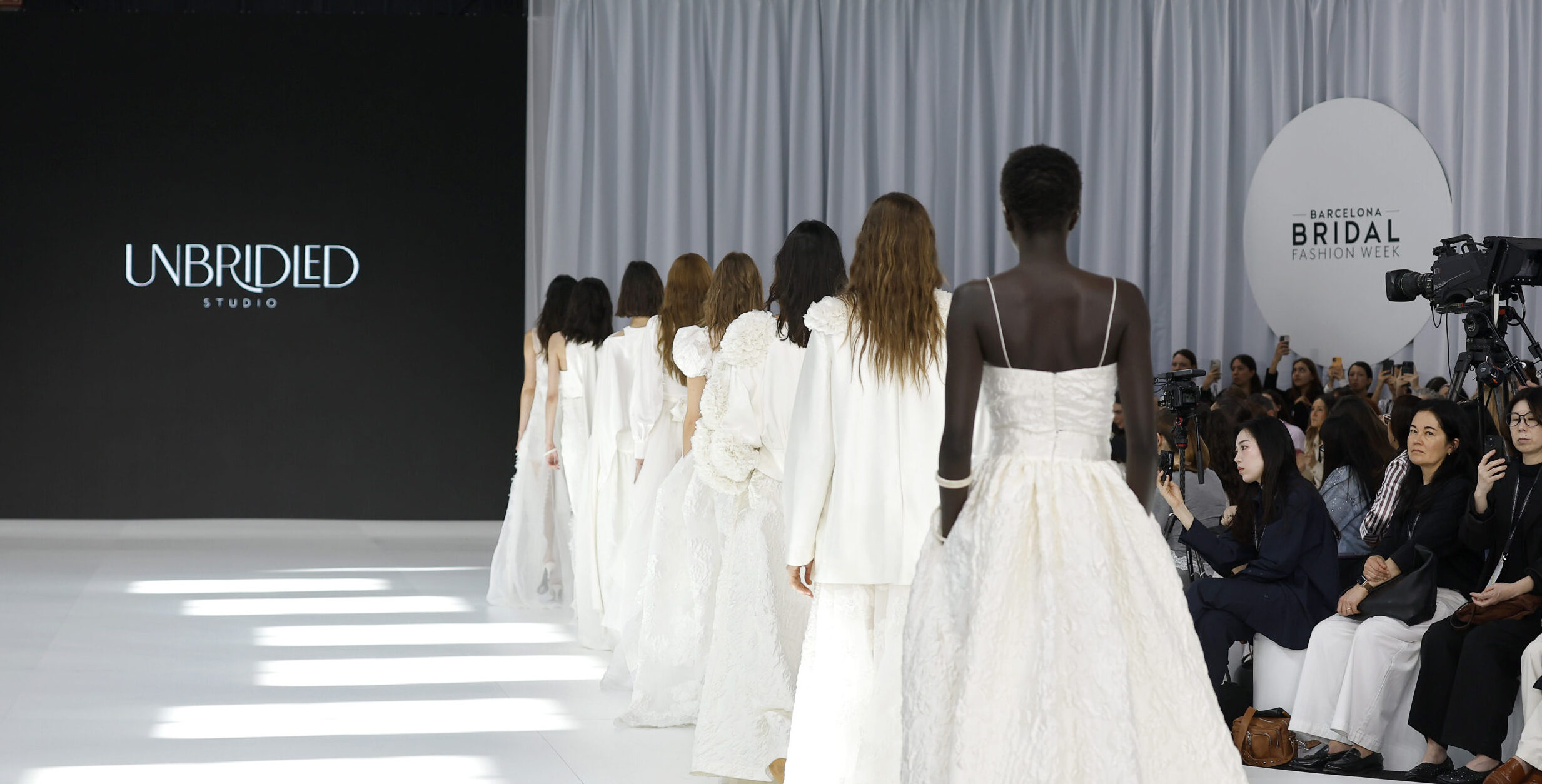
Barcelona Bridal Week drew more than 400 brands this season and delivered a clear message across its runways. While some, like the high minimalists at Australian brand MWL Bridal, presented simple, 90s-inspired designs, others, like The Atelier by Jimmy Choo, went high watt fairytale, showing various designs with fanned tulle skirts. Still, vintage continued to inspire, with Spanish brand Yolancris developing vintage plissé designs from archival fabrics.
The trends emerging from Barcelona Bridal Week suggest a 2027 bride interested in versatility and craft: capes and blazers allow transformation – one look for the ceremony, another for the reception – peplums and plissé offer structure without rigidity. These are the six standout bridal fashion trends for 2027 from Barcelona Bridal Week.
Capes
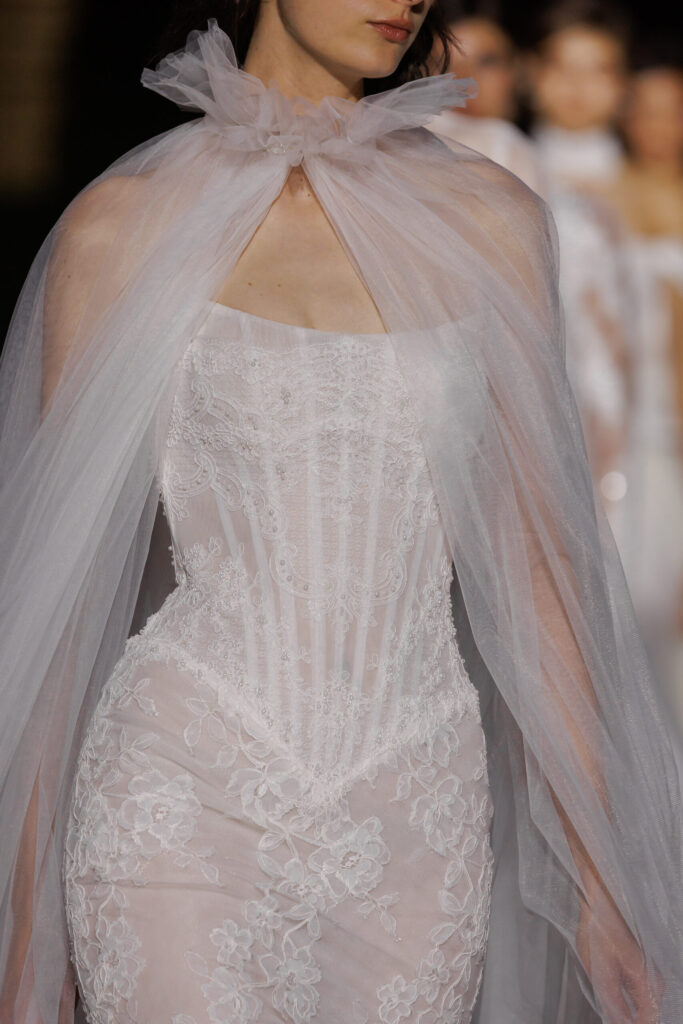
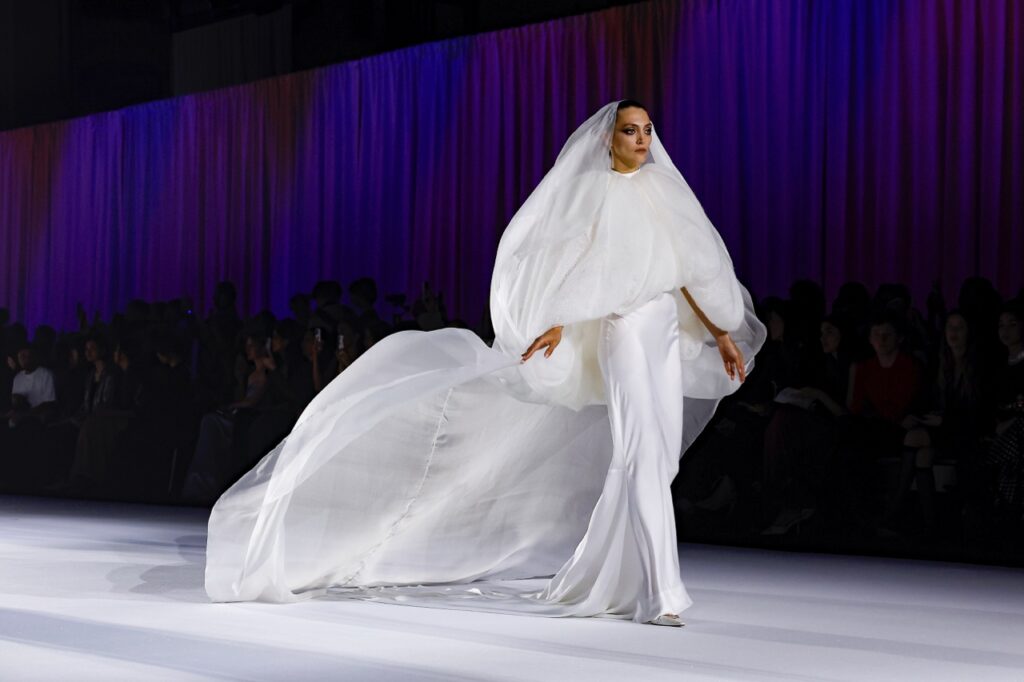
The cape emerged as the season’s most practical layering piece, allowing brides to shift mood mid-event without a full costume change. Ukrainian sister brands Woná Concept and Eva Lendel demonstrated the range with two opposing approaches: Woná Concept showed a black cape that read subversive against bridal white, and a feather-light tulle version draped over minimal slip dresses. Eva Lendel followed with simple draped capes in clean lines, prioritising fabric fall over embellishment.
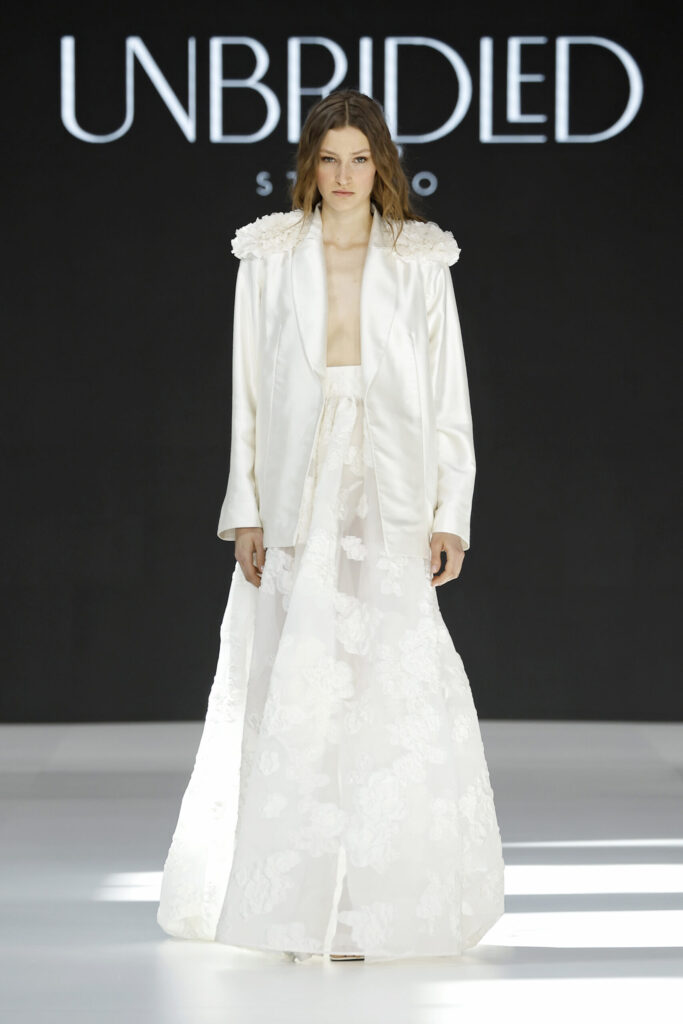
British designer Unbridled Studio took the opposite route, presenting an operatic embroidered cape dense with 3D flowers and designed to be removed after the ceremony, transforming the look from high-drama entrance to pared-back reception dress.
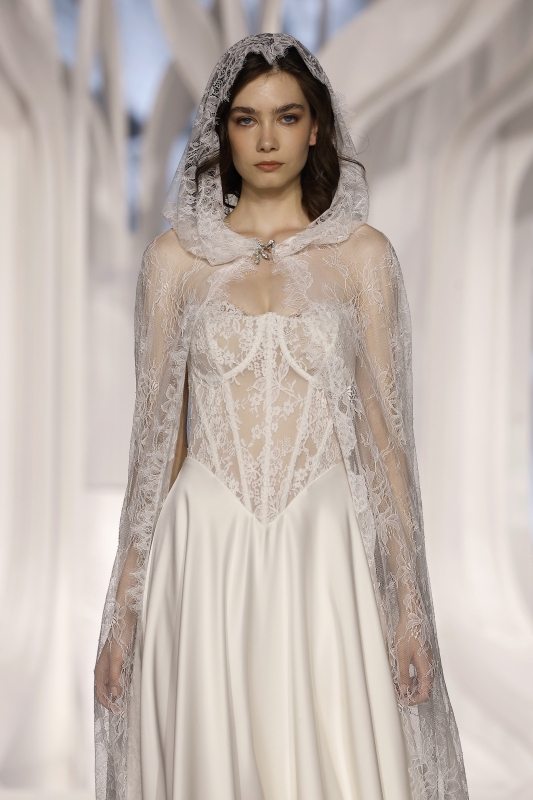
Wang Feng’s versions moved fluidly on the runway in a Grecian interpretation, while Jimmy Choo Atelier presented sheer capes with balletic quality – light enough to float. Justin Alexander introduced further interest with a fluid chantilly lace cape, with light floral motifs and scalloped edges, fastened by a dainty decorative brooch.
OKSANA MUKHA worked with sheer feathered capes that added texture and interest, and Stéphane Rolland blurred the distinction entirely by embedding cape-like folds into the dress construction itself, making the cape part of the garment rather than a separate accessory.
Plissé
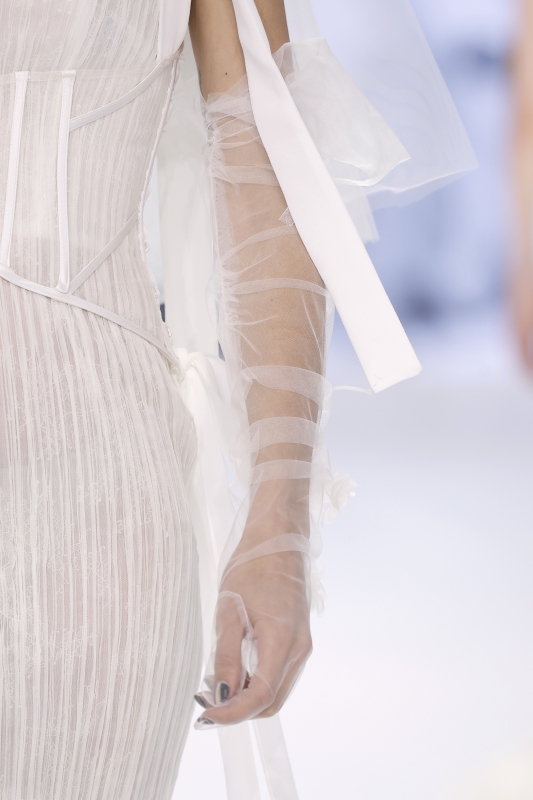
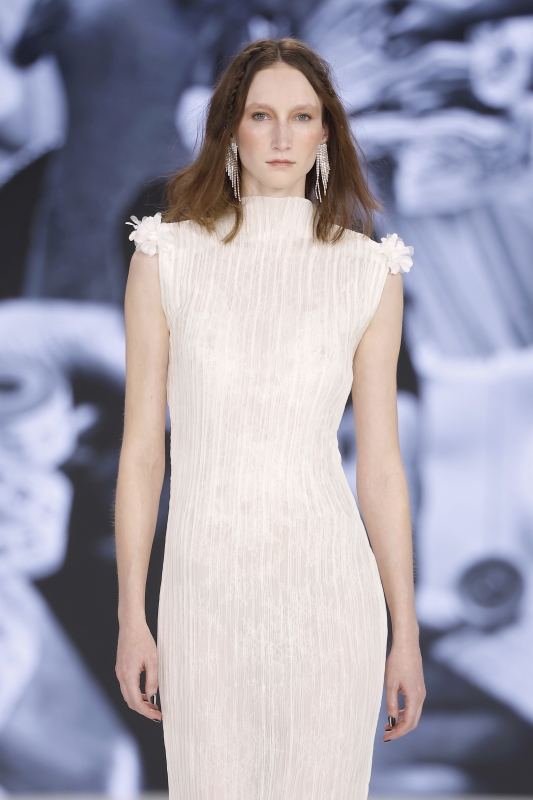
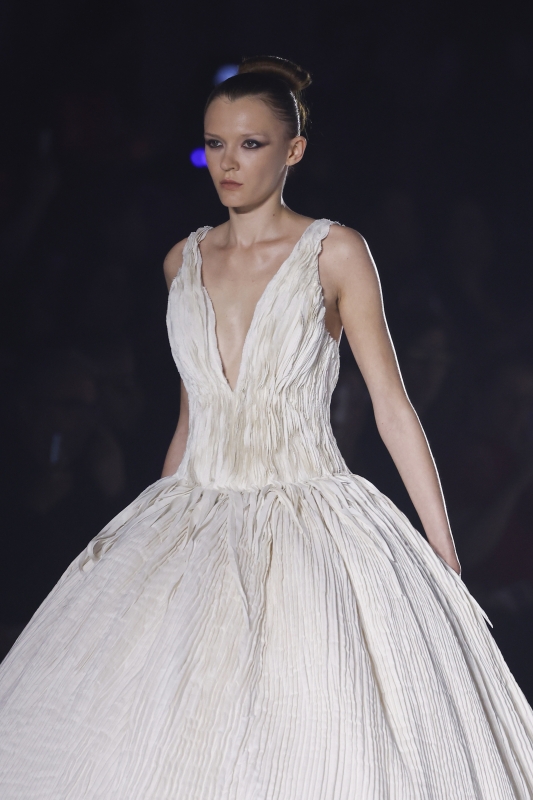
Pleating appeared throughout collections as both full-garment construction and textural accent. The technique offers structure that moves – pleats hold fabric shape while allowing fluidity, making it ideal for brides who want architectural silhouettes without rigidity. British house Sassi Holford‘s swan-like strapless plissé gown demonstrated this balance, the pleats creating movement and structure simultaneously.
Yolancris worked subtle pleats into archival vintage fabrics as part of a broader collection emphasis on Spanish textile heritage and craft-first construction.
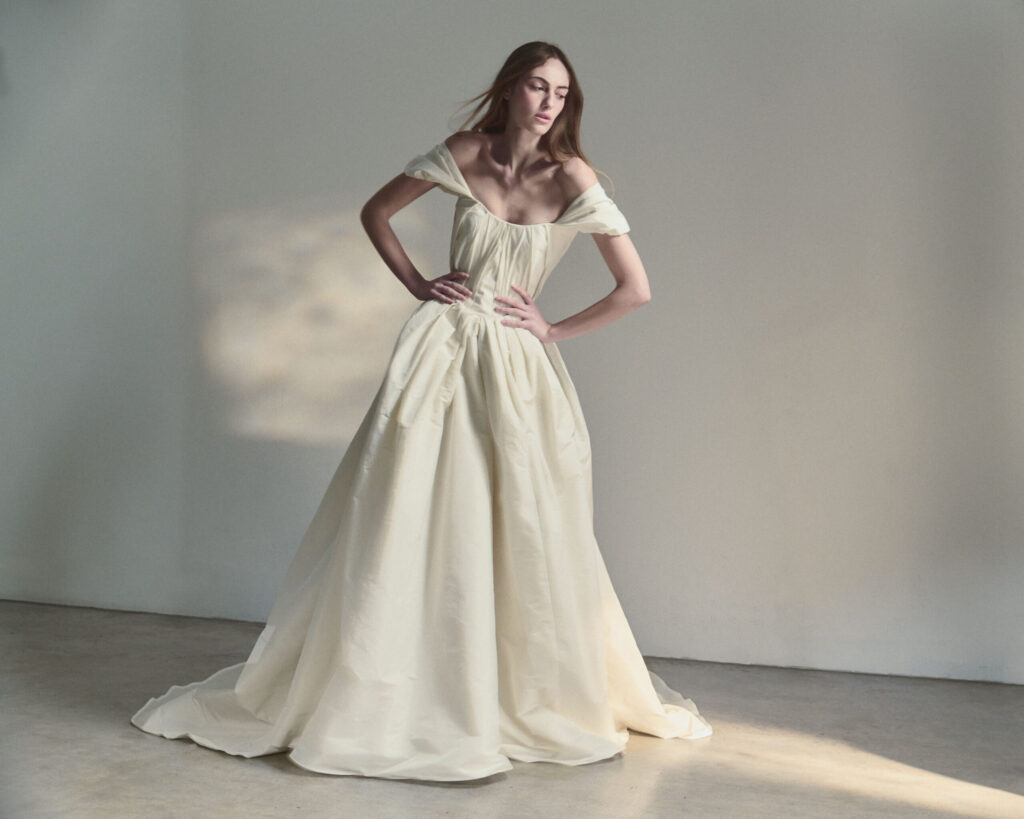
One of the purest interpretations came from Isabella Palacio, an ESDI design school student who opened for Stéphane Rolland on Barcelona Bridal Night. She presented a fabric-forward approach with an organic plissé treatment and tactile crinkle effect that opened into a voluminous, textured skirt.
Peplum
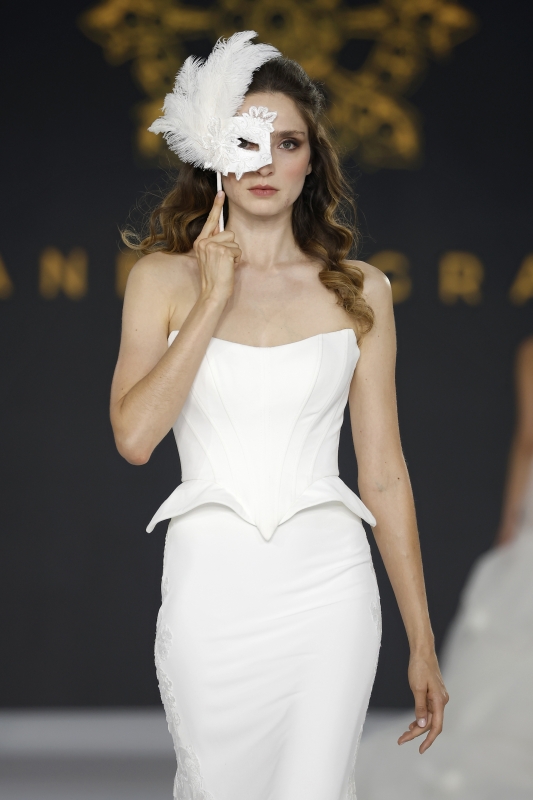
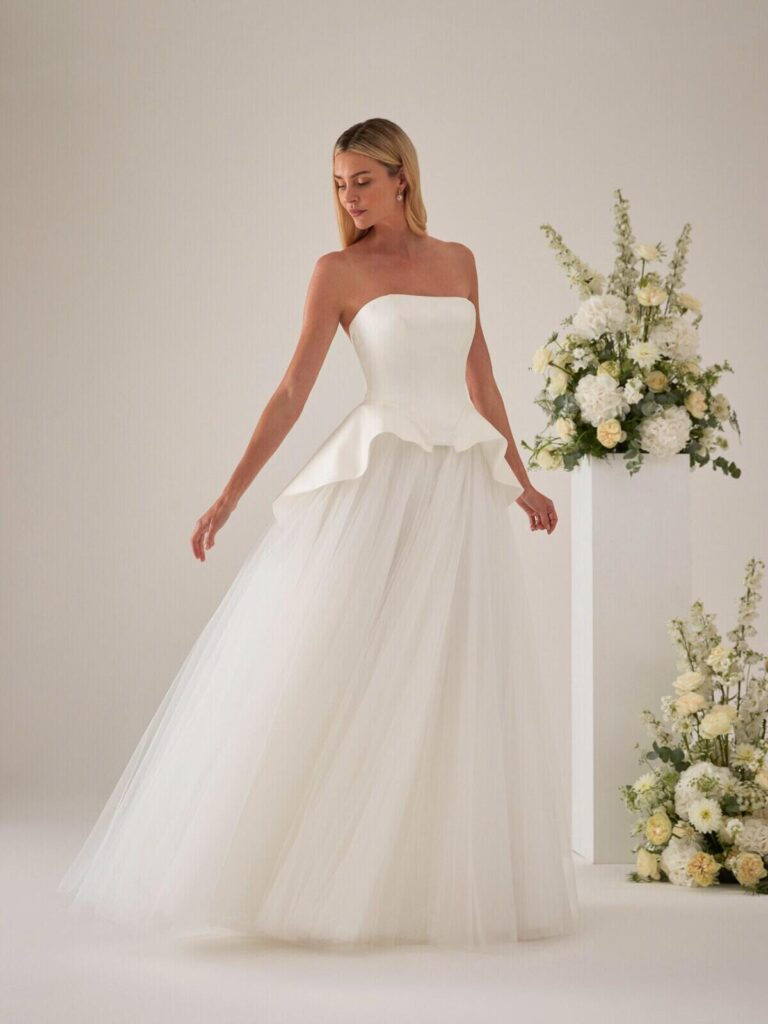
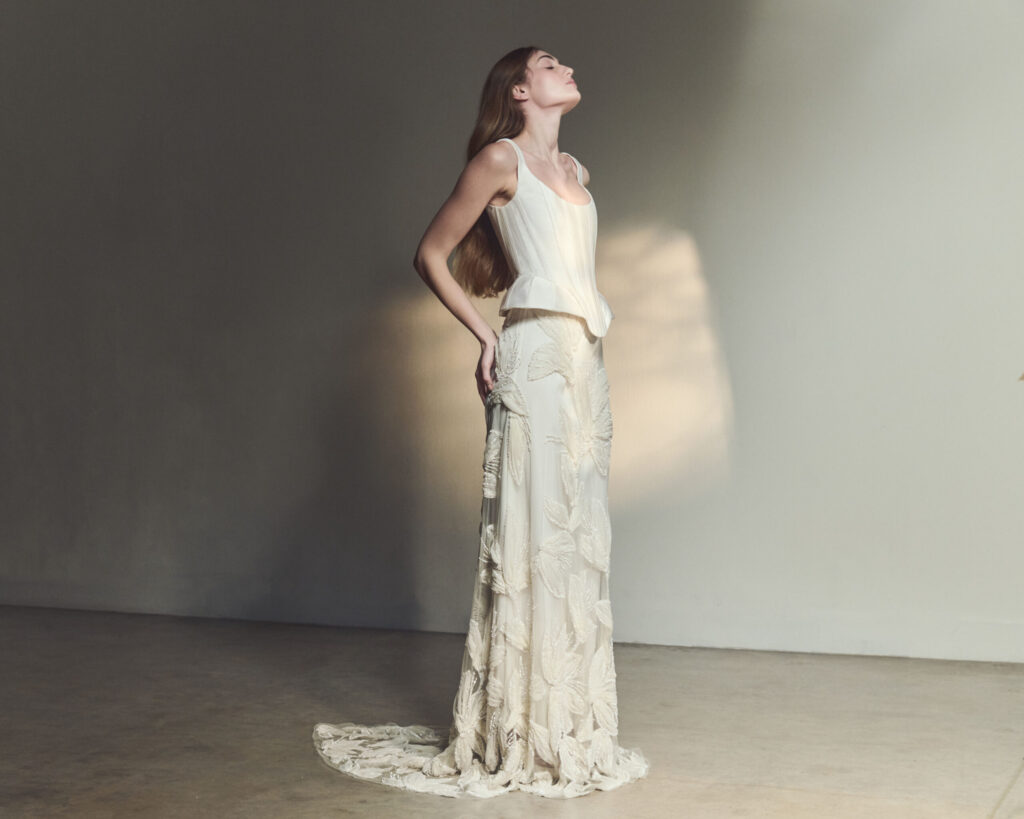
The peplum – or pannier, the 18th-century understructure that extends fabric laterally at the hip – returned in both restrained and exaggerated forms. The appeal is architectural: it creates silhouette without adding fabric weight, and it allows designers to reference historical dress codes without full costume. Justin Alexander showed a minimal interpretation: a sweetheart-neck strapless gown with the faintest two-pronged arch at the waist. Diane Legrand, Woná Concept, and OKSANA MUKHA took similar approaches, favouring subtlety.
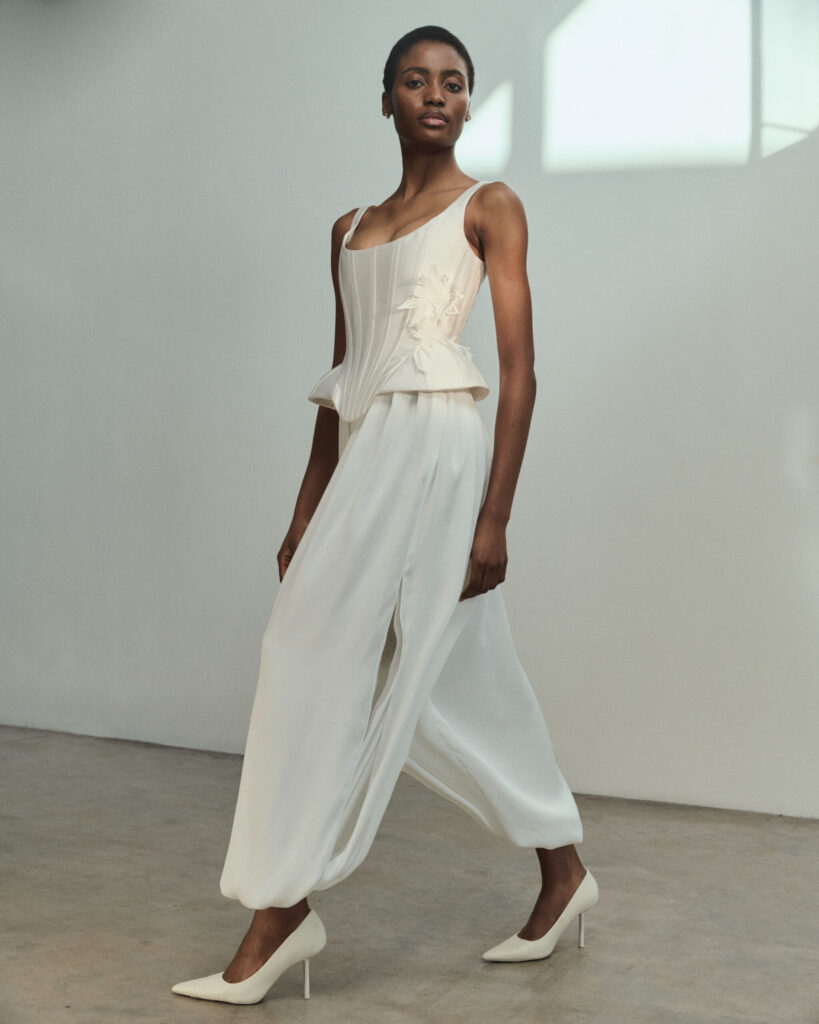
Halfpenny London pushed further with several styles showing pronounced outward curves, pairing exposed corset bodices with hip extensions and combining boned corsets with semi-sheer skirts layered in graphic floral appliqué.
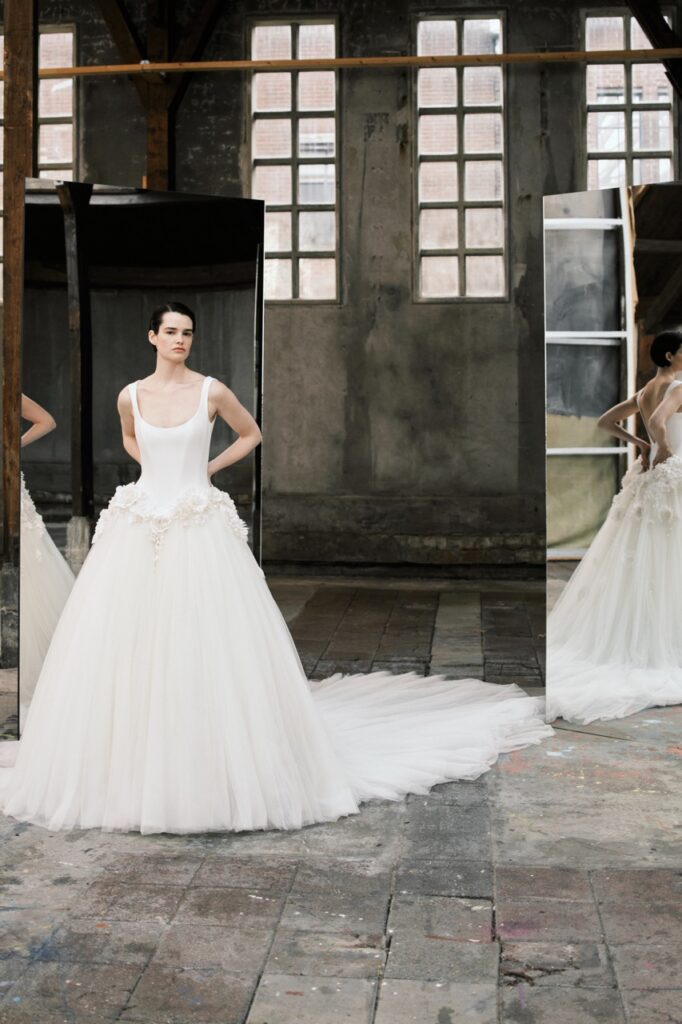
Viktor & Rolf Mariage embedded three-dimensional fabric flowers beneath the pannier structure to engineer volume from within – using flowers to do structural work.
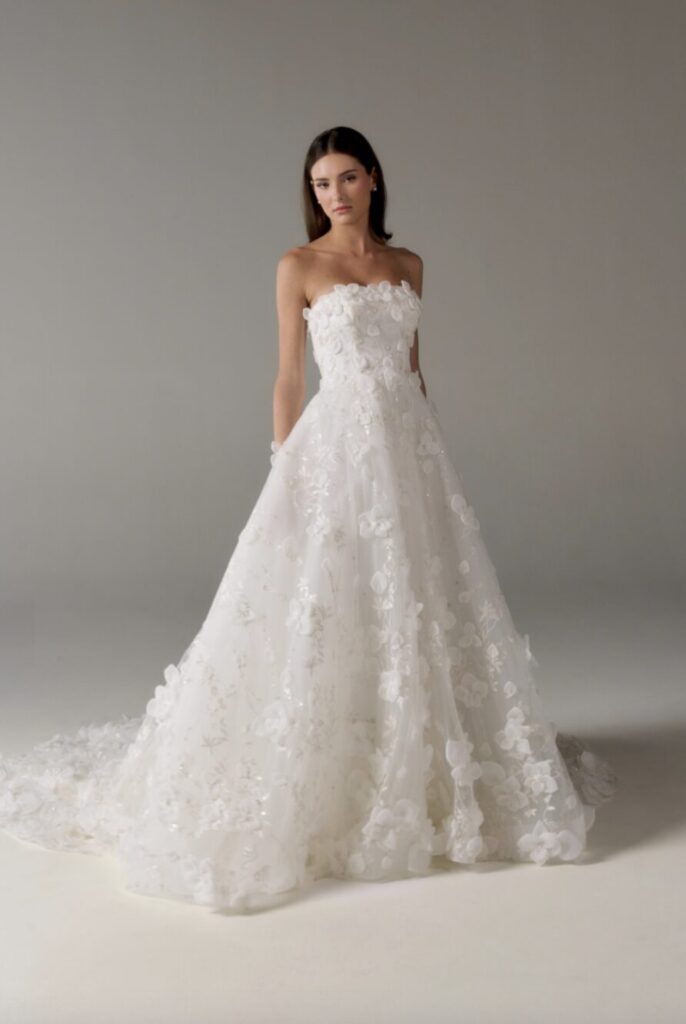
Poeza contributed a strapless ballgown with visible boning and a pronounced peplum at the natural waist, and a second gown where 3D floral appliqué scattered across bodice and skirt created textural depth.
Sassi Holford‘s Sculpted Light collection offered a streamlined alternative with the Talia bodice: a silk-blend satin gazar with a basque waist indent, a Victorian-era technique that creates a similar hip-widening effect without the full pannier structure.
Blazers and Jackets
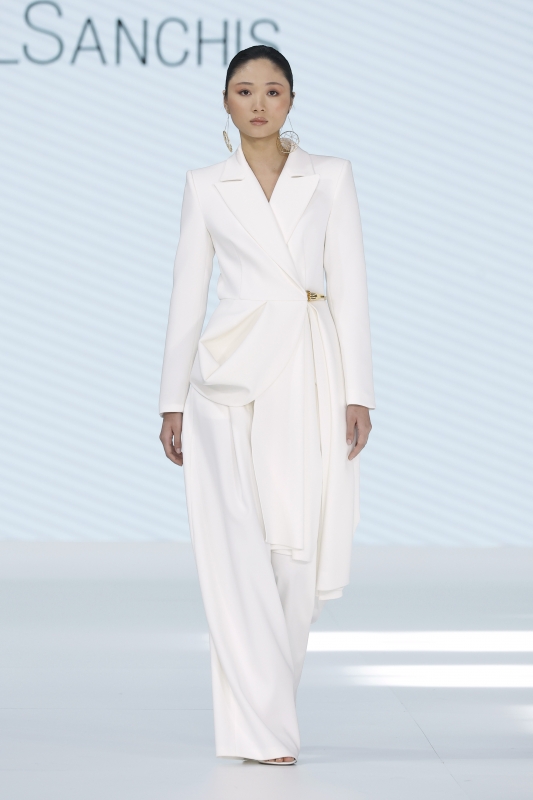
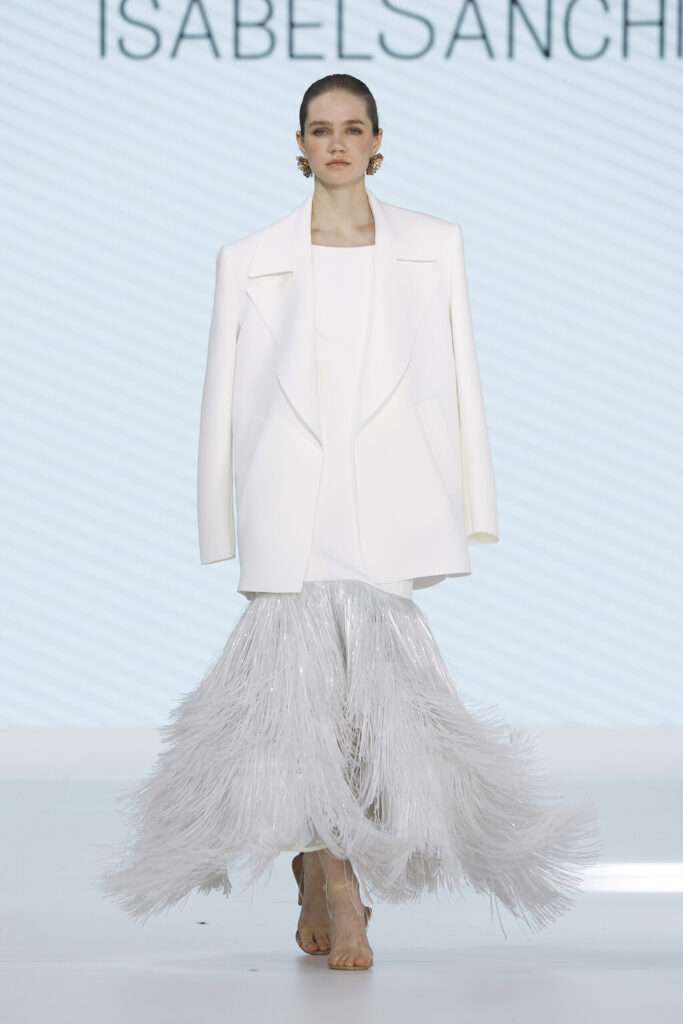
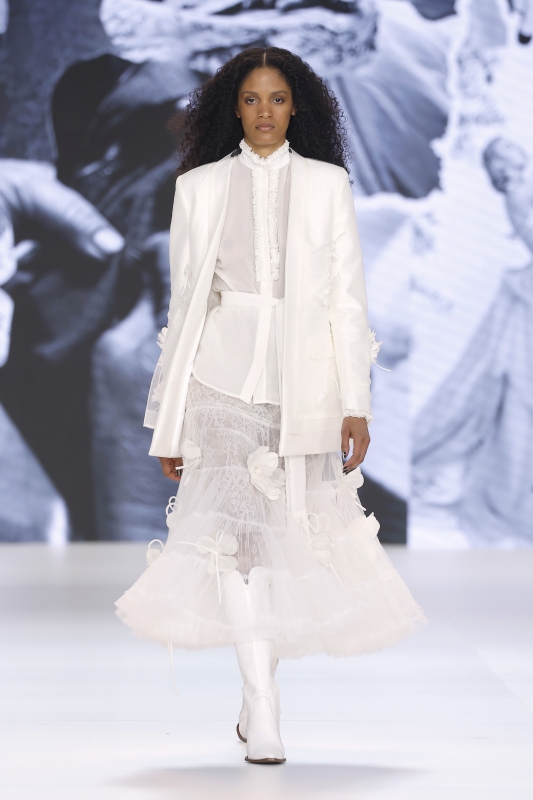
Tailoring appeared not as borrowed menswear but as architectural layering, offering brides modular options: blazers worn for the ceremony, removed for the reception, two looks without a full dress change. Barcelona-based designer Isabel Sanchis showed two approaches – a short embroidered bolero-style jacket with cap sleeves, and a deconstructed off-shoulder blazer with clean lapels and precise tailoring.
Yolancris presented multiple iterations across the week: a mid-thigh white blazer layered with a full coverage lace bodice, creating masculine-feminine contrast, and another version with appliqué flowers pasted across the fabric and paired with a textured feathered skirt.
Elsewhere, Unbridled Studio placed 3D flowers across blazer shoulders and also offered a puffed opera-coat style for a dramatic layering turn.
Florals
Flowers appeared across collections, functioning as both surface decoration and structural element. British designer Caroline Castigliano, an ambassador for traditional romance, covered gowns entirely in embroidered blooms, hand-embroidery techniques applied at scale. Unbridled Studio clustered flowers on capes and blazer shoulders, just as Yolancris applied floral appliqué to blazers, the flowers pasted flat against the fabric for graphic effect.
Viktor & Rolf Mariage and Stéphane Rolland pushed flowers into structural territory: Viktor & Rolf embedded lilies of the valley, dahlias and roses beneath panniers to create volume from within, while Stéphane Rolland attached oversized blooms at the waist to mimic pannier shape without the traditional understructure.
New York-based designer Poeza scattered 3D floral appliqués across both bodice and skirt to add textural weight, combining a clean silhouette in line with the house’s quiet luxury style, textured enough to create depth.
With thanks to:
Barcelona Turisme: @visitbarcelona
Barcelona Bridal Fashion Week: @barcelonabridalfashionweek_
Catalan Tourist Board: @catalunyaexperience
W Barcelona Hotel: @wbarcelona
Melia Hotels: @torremelinagranmelia @mebarcelonahotel @mesitges
Palau de la Música Catalana: @palaumusicacat
Casa Vicens: @casavicens
This is Med: @thisis_med
La Roca Village: @larocavillage
Codorniu: @codorniuglobal
READ NEXT: Inside London Bridal Week: Bridal Trends For 2026